The Overbooked Life

Because balance is a myth, but coffee is real.

  • Daily writing prompt
    Do you spend more time thinking about the future or the past? Why?

    Most of us try not to linger too long in the past, but for some of us it hangs overhead like a stubborn cloud. I don’t love that so many of my posts circle back to the harder parts of my childhood, yet pretending they didn’t shape me would be dishonest. The past is part of who we are — whether we want it to be or not.

    Children who grow up with praise and encouragement tend to become adults who are open, responsive, and confident in their abilities. They develop intrinsic motivation, try again after failure, and internalize values. They trust adults more easily, communicate more freely, and build healthier social connections.

    Their counterparts — the children who grow up with yelling, criticism, or emotional neglect — often become more closed off. They learn to avoid risk, not because they lack ability, but because they fear punishment. They may give up sooner, attribute success to luck, and struggle with fragile self‑worth. Trusting others becomes harder. Forming secure attachments becomes a challenge.

    And whatever parenting pattern a child grows up with often becomes the one they unconsciously repeat. I’m not exempt from this. On days when I’m tired or short‑tempered, I catch myself yelling over things that don’t matter. I try not to dwell on the past, but it’s hard not to when I see echoes of it in my own reactions. Still, I take pride in knowing I’ve never reached the extremes of what I lived through.

    I’m trying to break the cycle of abuse — what many call generational trauma. It’s a broad term, because trauma takes many forms: emotional, physical, mental. Generational trauma describes how pain and patterns pass from one generation to the next through learned behaviors, family systems, and even biological stress responses. When a parent who was abused becomes an abuser, that specific pattern is often called the intergenerational cycle of abuse — a narrower, more precise piece of the larger picture.

    I don’t want my children to sit across from a therapist one day because of the way I raised them. And to be clear, there is nothing wrong with therapy — I’m in it myself. But my hope is that their childhood won’t be the central wound they spend their adulthood trying to heal. Breaking old habits is harder than it sounds, especially when the only model of motherhood you had was one shaped by fear.

    So yes, I think about the past a lot. I compare my mother’s reactions to my own and ask myself whether her way was the right way. Often, the answer is no. That doesn’t erase the things she did right — it just acknowledges that some of what I learned wasn’t healthy. In many ways, writing this blog is its own form of therapy.

    I was the child told to shut up and sit down. To be seen, not heard. I was smacked, insulted, and taught that invisibility was safety. Staying quiet meant staying out of the line of fire. That survival strategy followed me into adulthood.

    I still struggle to stand up for myself. My voice shakes when I use it. Public speaking feels like stepping into danger. Even being recorded doing my job sends me into panic. I’ve turned down promotions because the thought of being seen by a crowd makes my mind go blank and my body want to fold in on itself.

    I hide behind dark humor and excuses:

    “I don’t like how I look on camera.” “I teach better one‑on‑one.” “Large groups just aren’t my style.”

    The truth is simpler: being seen still feels unsafe.

    So here I am — a faceless name on a blog. Anonymous. Invisible. Safe.

    But my goal is to change that. To break the bonds that keep me small. To spend more time thinking about the future instead of reliving the past.

    And if any of this resonates with you, please know you’re not alone. I hope you find your voice, too.

    You deserve to be seen. You deserve to be heard. Your voice matters. You matter.

    Until next time, keep the coffee hot and the chaos manageable.

  • Daily writing prompt
    Describe a man who has positively impacted your life.

    We all carry stories written into us by the people we meet. Some of those stories are gentle, filled with love and encouragement. Others are sharp, carved by pain and hardship. Together, they shape the person we become.

    Most of us remember the positive influences more easily. We cling to the people who lifted us, encouraged us, and showed us love. But the negative ones leave their marks too—engraved into our cores in ways we can never fully erase.

    Some of the bad people we meet in our lives melt away in time, and their past actions are just that, echoing actions of the past. We grow past them and forget them. But a few remain. Etched into our beings like a knife nicking into bone. Carving a story that built us.

    For me, there are a few men who left those lasting marks: two of my exes, my first stepfather, and my biological father.

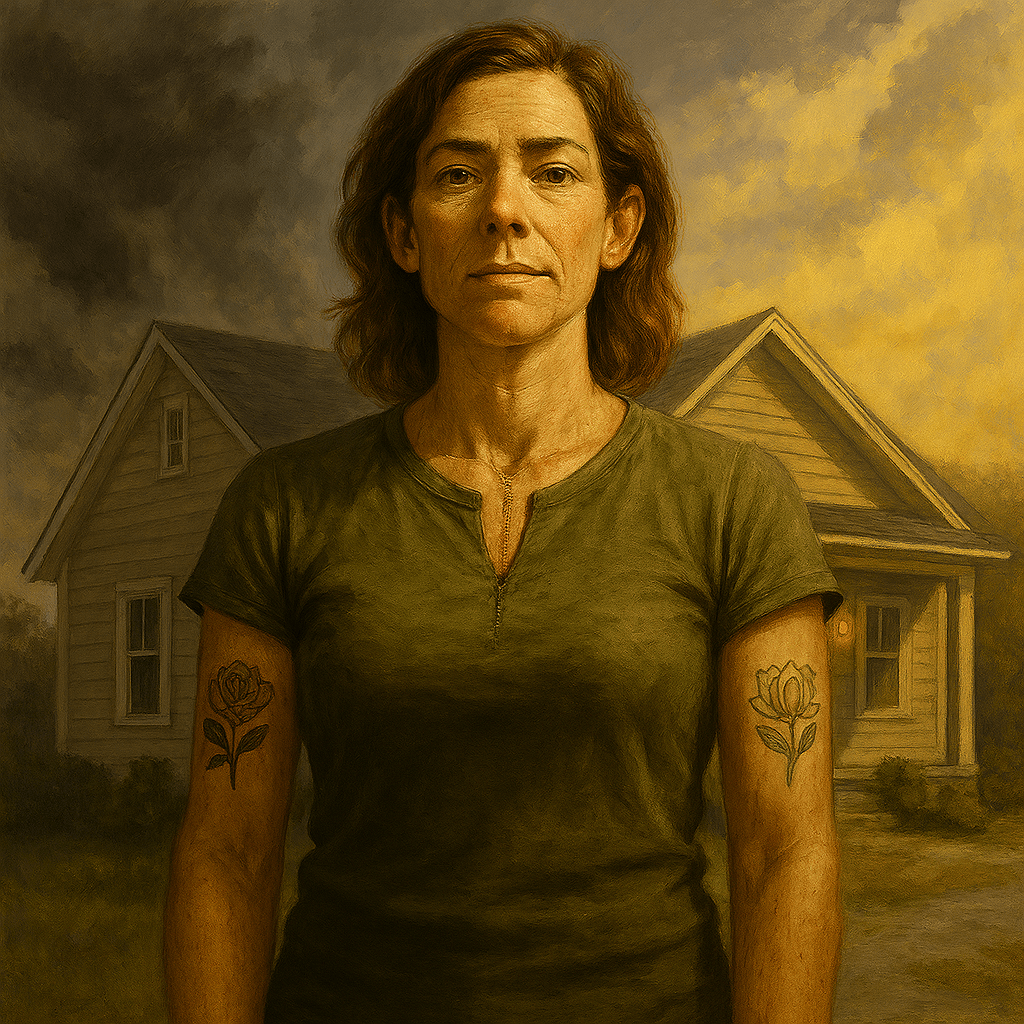
    Then there are many positive ones. They too etch themselves into our lives. Staining into our flesh like tattoos we are okay with showing off. My husband is one. My stepfather from my youth, though age and illness have changed him. A few of my past bosses. And even my young son.

    We all carry both good and bad marks. And strangely enough, even the bad can leave something useful behind—helping shape who we become.

    My father and my first stepfather were not good men. They were abusive—both physically, emotionally and mentally. For me, all forms of abuse cut the same. As painful as it is to admit, those experiences taught me to recognize the signs. As a child, I promised myself: I will never let myself be in that situation.

    Yet I found myself there again, with my oldest daughter’s father. Abuse doesn’t arrive suddenly; it creeps in, disguised as something else. If I hadn’t lived through the trauma of my father figures, and if I hadn’t seen what a good man could be like through my later stepfather, I might not have recognized it.

    My daughter’s father is not a bad man. He simply wasn’t good for me at that time. Today, he is a loving husband and father, and I’m glad for his happiness. Still, I carry anger from those years—the yelling, the things thrown, the fists in walls, and once even at me. Those moments were an eye-opener. Unlike my mother, I refused to stay. I had grown up hearing every dark tale she endured with my father, and I refused to repeat her steps.

    My first stepfather was emotionally abusive and physically abusive toward my sister and me, though never toward my mother. Those years are etched more strongly in my memory than my biological father.

    My first husband was not physically violent to me, but he was emotionally abusive. And when my first stepfather began cheating on my mother, I saw echoes of those same behaviors in the man I married. You read about these patterns, but until you’ve lived through them, you don’t always recognize them in your own life. The violent arguments and the heavy silences carried over into my marriage.

    He was quick to deflect blame, pointing fingers at me. To my dismay, my sisters believed him. They thought I had been dishonest, and no amount of truth could change their minds. His new wife even echoed those lies to my daughter. And when the marriage ended, I lost everything in the divorce. He took it all, leaving me to rebuild from nothing. That loss became a turning point—the lowest valley I had to climb out of.

    When my daughter later asked me about it, I refused to answer—at first. But as she grew older, the truth surfaced. She remembered the woman herself, remembered the things she said. My daughter had lived that reality alongside me, even if she didn’t understand it at the time.

    I know those experiences left a mark on her, just as mine did on me. I wish she hadn’t had to carry that burden. But those negatives, those painful memories, shaped me. They taught me what a good life and a good man should look like.

    And beyond the men in my life, instability itself carved its mark. I grew up moving constantly—thirteen different school districts, not just schools, but districts. My parents couldn’t hold jobs or pay bills, and that chaos shaped my childhood. It hurt my grades, disrupted my ability to learn, and left me without the stability every child deserves. My mother never owned a house, and that fact weighed heavily on me.

    That’s why purchasing my own home was more than just buying a house—it was breaking a cycle. It was claiming stability I never had and proving to myself that I could build something permanent. Because of what I experienced in my divorce, I made the decision not to put my husband on the loan. It was a way to protect myself, to ensure I would never lose everything again. Yet I also left it so that if something happened to me, he could take over the loan, and the house would be his. It was both protection and love—born from scars but shaped into security.

    As a parent, I strive to give my children what I lacked: a steady place to grow, a safe foundation. When I tried to go to college, I had no support. I had to choose work over school, time and time again. So now, I make sure my kids have a home where they can live free while they study, so they can finish if they choose to.

    People often say today’s kids have it easier because we had it harder. But I believe any good parent wants better for their children than what they had. My parents didn’t give me that, and maybe that’s why I fight so hard to ensure my children never know what it’s like to go without.

    I still suffer from the pains of the past, but I reflect on them often. They helped me grow into the independent woman I am today. There’s truth in the saying, “What doesn’t kill you gives you unhealthy coping mechanisms.” It scars you, carves into you, and forces you to learn. I don’t recommend it if you can avoid it. But for those who have lived through it—know this: better days are possible.

    We all carry scars and tattoos, etched into us by the people who’ve crossed our paths. Some marks we hide, others we show proudly. But together, they tell the story of survival, growth, and resilience. My house is one of those tattoos—a mark I’m proud to show off. It represents stability, protection, and love, built from the lessons of my past. If you carry scars, know that they don’t define you—they remind you of your strength. And if you carry tattoos of love, let them shine. Because in the end, both the pain and the joy carve us into who we are meant to be.

    Until next time, keep the coffee strong and the chaos manageable.

  • Working in commission sales means living in a world where money is always on your mind. Not just the money itself, but how your sales are written, who gets credit, and whether someone might claim them when you’re off. It’s a constant balancing act, and sometimes it makes even taking a day off feel risky.

    I’ve been in sales like this for 15 years. That might sound dark and stressful to some, but I’ll be honest—I’ll never work another line of work again. I love what I do. But let’s be real—some days will still push you to your limits. And it’s often those days, the ones that test your patience and resilience, that leave the deepest impressions.

    Like the night a couple wandered in after a massive snowstorm…

    The Couple After the Snowstorm

    I was working alone when they came in. The man casually mentioned, “I called yesterday to see what you carry.”

    I did the usual thing—asked who he spoke with. He didn’t remember. I pressed just a little further: “Do you remember if it was male or female?”

    Here’s why that mattered: I’m a woman, and in our shop there’s only one male who works the floor. If the customer had even remembered the gender of the person he spoke with, I could have narrowed it down a little. We have 4 others who work in the shop besides me and my male co-worker, my thought was if he could say if it was male or female, I could maybe pinpoint a little easier who got them in the store. But he couldn’t. He had no idea.

    And in our shop, we’re not supposed to dig too deep. We don’t push. Sometimes people don’t want to work with the same person again, and that’s fine. Asking that extra question was already a stretch. However, I believe in fairness and try to ensure I support my co-workers as much as I can.

    While they tested the product, I did some digging. I even called a manager to help. In our store, we document every interaction—phone calls, walk-ins, everything. It’s accountability. It helps us remember what was said and ensures coworkers can pick up where we left off.

    So, I did what we always do. I found what they needed. I taught them about the product. I explained why they liked what they did and why the mattresses they didn’t like didn’t work well for them. I spent three hours with them—one of those hours past closing. They left happy. I left happy.

    The Missing Notes

    While they tested the product, I did some digging. I even called a manager to help. In our store, we document every interaction—phone calls, walk-ins, everything. It’s accountability. It helps us remember what was said and ensures coworkers can pick up where we left off.

    But we found nothing. No notes. No record of a call. No trace of this couple at all.

    I wrote up the ticket—nearly $9,000.

    The next day, on my day off, I got a text: “That was my couple.”

    The Sit-Down

    I spent the whole day stressed. When I spoke with my boss, she agreed—there was no documentation to support his claim. Nothing.

    Days later, the sit-down in the office came.

    I explained everything. I even offered to give him 50% of the ticket since he had texted the guy. He wasn’t happy. He accused me of twisting things, hinting I was lying. My manager knew I wasn’t. She had been there. She had helped me look. He had failed to do his job.

    This wasn’t new. He is known for not doing the job in the fullest. This coworker had a reputation for taking parts of tickets he shouldn’t, costing another coworker over $50,000 in sales by putting them under his own name. And now he was accusing me of dishonesty.

    That’s what burns the most—being hinted at as a liar. I work hard to be honest. Fair, even to the point it costs me. And now this. It hurts. I thought this guy was my friend.

    When Money Is on the Table

    I suppose when money is on the table, no one is your friend. His angry rants accused me of bending policy, demanded half of my other tickets, and so much more. I sat there, almost in tears, shocked at who this person turned out to be.

    Exchanges and reselections in our store are always a touchy subject. The rule is simple: if you take part of the new sale, you take equal parts of the return. If you take the whole ticket, you take the full return. If you double the ticket, you take half the hit. It’s a “do no harm” policy—everyone’s income is protected.

    But he had failed to follow this with another coworker. And when he accused me of stealing, twisting the truth, I snapped.

    Breaking Point

    “Pot, meet kettle,” I said. “Are we just saying whatever we feel like at this point?”

    My manager waved her hand for me to continue. And I did.

    This guy never stays in our area like he should. He never supports me on busy days. He’s always wandering, smoking, or distracted. Meanwhile, I’m left handling four or five guests at a time alone. That sets off my anxiety. I built this shop’s reputation on care and respect.

    Watching him take from another coworker, then complain that I had better sales or was cherry-picking—when he wasn’t even in the area to talk to guests—was too much.

    “You’ve been stealing from [coworker] for two and a half months. Over $50,000 of your sales are his. I don’t think you have what it takes to make it in this department. You’re running short on his reselections, so now you’re digging into mine, crying foul when you failed to do the basics of your job.”

    My boss agreed. She supported me. But I was still kind—I split the ticket.

    The damage, though, was done.

    The Fallout

    There’s a rift now. Things will never be lighthearted between us again. I can’t trust him. He flat-out said I wasn’t trustworthy. That stings. I trained him. I helped him close deals he would have lost. I asked nothing in return.

    And now I feel punished for following rules he chose not to follow.

    Was it fair? No. Was it kind? No. Was it honest? Yes. 100%.

    Reflection

    Commission sales are a battlefield. It’s not just about products—it’s about integrity, trust, and the fragile balance between coworkers. I love what I do, but moments like this remind me that the hardest part of sales isn’t the customer. It’s the people you work beside.

    And sometimes, the cost of honesty is heavier than the commission itself.

    If you work in commission sales—or any competitive environment—remember this: documentation matters, integrity matters, and protecting your reputation matters. You can’t control how others act, but you can control how you respond. Stay fair, stay honest, and don’t let someone else’s shortcuts define your worth.

  • Glitter in the Crayola Box: How One Job Changed Everything
    Daily writing prompt
    Tell us about your first day at something — school, work, as a parent, etc.

    We all take that first step to learn something new several times in our lives. Usually, it’s something small — a new recipe, a new hobby, maybe even a new hairstyle we instantly regret. But every once in a while, that “something new” doesn’t just add a chapter to your story. It rewrites the whole book.

    I’ve been in my job for over 15 years now. No fancy college degree required — just a high school diploma and a stubborn streak. If you haven’t read my blog before, you might already be guessing: food industry, retail, Walmart, maybe something like that. And you’d be half right. I’ve done those jobs. There’s nothing wrong with them — in fact, they taught me grit. But the job I do now? It’s not flipping burgers or stocking shelves.

    I sell furnishings. Mostly mattresses. Yep, I’m the person convincing you that yes, you really do need to spend more on the thing you’ll spend a third of your life lying on. And today’s topic made me nostalgic, because the way I landed this career was anything but ordinary.

    🚶 The Walk That Changed My Life

    Picture this: I was 25, a single mom with three kids, roommates who thought rent was optional, and a car that had decided to retire early. My transportation was a mix of buses and sneakers. I’d just left a job as a payday loan officer (spoiler: daycare cost more than my paycheck), and I was applying everywhere — food places, gas stations, K‑Mart (yes, it was still alive back then), Target, Walmart, hotels. You name it, I tried.

    But no one was hiring. It was 2010, right after the Great Recession, and the job market was tighter than my budget.

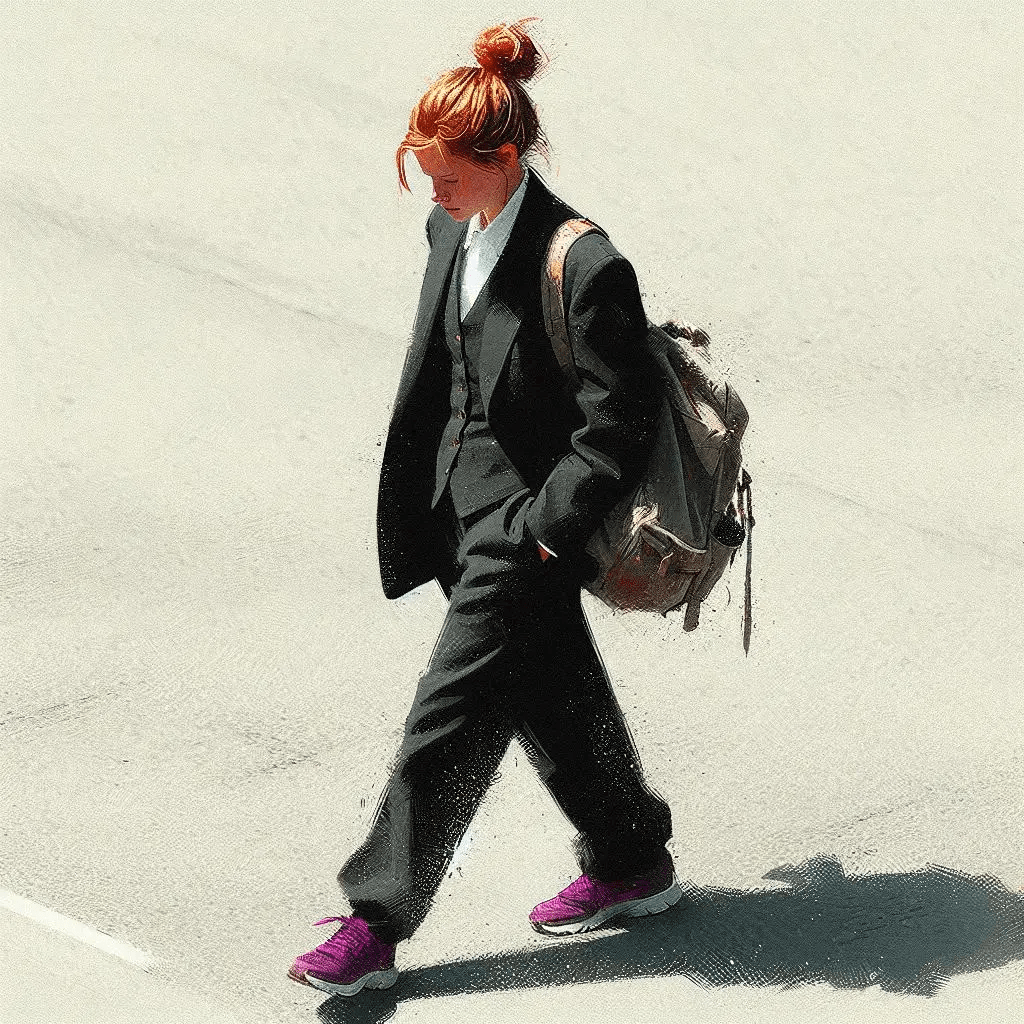
    So there I was, walking through a strip mall parking lot in the blazing sun. My hair was in a sensible bun, I had on a black suit coat, white shirt, vest, and slacks. My secret weapon? A bag with dress shoes tucked inside, because walking in heels is basically medieval torture.

    I spotted a furniture store. Honestly, I only went in for the air conditioning. But the woman at the door saw how I was dressed and asked if I was there to apply. “Sure,” I said, because why not?

    I filled out the paper application (remember those?) and handed it to the man behind the counter, who didn’t even look up. That annoyed me. So I reached out my hand, forced him to meet my eyes, and said, “Thank you for your time.” He shook my hand, probably out of reflex. I walked away thinking, Well, that was pointless.

    Halfway down the store, he came running after me. “Do you have time for an interview right now?”

    🎨 The Glitter Moment

    Two days later, I was in a group interview with ten other people. At the end, we had to answer the classic “Crayola color” question: If you were a color, what would you be and why?

    Everyone else gave safe answers. Blue for calm, red for vibrant, yellow for cheerful. My turn came, and I said the first thing that popped into my head:

    “Glitter.”

    The room went silent. The interviewer looked at me like I’d just confessed to being a unicorn. “Why?” he asked.

    My answer: “Someone who sees themselves as blue needs a blue to help them. A red needs a red. A yellow needs a yellow. You can’t identify as one color or one mood set when helping people in customer service. You have to be every single color at any given moment so the people you work with are comfortable with you.”

    That answer got me the job. Sometimes being different isn’t just good — it’s the thing that sets you apart.

    💡 Building Blocks

    The first year was terrifying. I felt out of my depth, constantly worried I’d mess up. But I had mentors who showed me how to improve, and I treated every piece of advice like a building block. Slowly, I built a foundation.

    Four, almost five years at that company taught me the value of my time, my effort, and my confidence. And 15 years later, I can say with certainty: I’ll never go back to hourly jobs again.

    🏡 What Sales Gave Me

    Funny thing is, I never studied sales. I went to school for networking (computers), culinary arts, psychology. But sales? Never crossed my mind. Yet that random choice to step into a furniture store changed everything.

    It took me from scraping by — worrying about rent, food, and broken cars — to buying a reliable car, living without roommates, moving into nicer apartments, and eventually buying my own home. Things I never thought someone like me could have, let alone keep.

    ✨ The Takeaway

    Sometimes the biggest changes come from the smallest decisions. For me, it was stepping out of the heat into a furniture store I never planned to enter. For you, it might be something else entirely. But here’s the lesson: don’t underestimate the power of glitter.

    Looking back, it’s wild to think that one random decision — stepping into a furniture store for a blast of air conditioning — ended up changing the entire course of my life. What started as desperation turned into opportunity, and what felt like a small choice became the foundation for everything that followed: stability, growth, and even a little glitter.

    I didn’t plan for this career. I didn’t study for it. But sometimes the best things in life aren’t planned — they’re stumbled into, embraced, and built upon one step at a time.

    So here’s my message to you: never underestimate the power of showing up, shaking a hand, or giving an answer that makes people stop and think. You don’t have to be the “perfect candidate” or have the “perfect plan.” You just have to be willing to take that first step, even when it feels scary or pointless.

    Because sometimes, the smallest choices — the ones you almost overlook — are the ones that change everything. For me, it was glitter. For you, it might be something else entirely.

    Step into the unknown. Say yes to the unexpected. And remember: your next chapter might be waiting behind a door you weren’t even planning to open.

    Until next time, keep the chaos manageable, and the coffee hot.

  • Growing up, it’s strange the things that end up living rent-free in our minds. These little memories echo at the most unexpected moments, triggered by who knows what. We never know which moments will become the core memories that shape us—or which ones we’ll unknowingly create for our own children.

    As adults, we carry those echoes with us. They help define us just as our youth once shaped who we’ve become. But growing doesn’t stop when childhood ends. We’re always changing, always absorbing, always being reshaped by what we experience each day.

    Still, I find myself pausing on the ways the past lingers in who we are now. If you’ve been reading my blog for a while, you already know a few things about me. I have PTSD, anxiety, and depression. Yes, I know—so many people these days carry similar labels. Most days I function just fine with them. I don’t wear them like a badge; I don’t announce them in my daily life. Honestly, it’s only here—behind the safety of anonymity—that I talk about the childhood moments that carved them into me. There’s comfort in being unknown, yet still able to speak.

    In some ways, I share more with this blank page than I do in therapy. Some people are talkers. Others (and I firmly fall into this group) are writers.

    So let’s take a step back into those depths for just a moment. I won’t bore you with an entire history—just one detail.

    My mother has never told me she’s proud of me.

    Not once. And somewhere along the way, I realized that my adult life has quietly revolved around chasing that one thing. Over and over. Waiting to hear her say I’ve done a good job. That I’m worth her time. Every kind thing I do for her seems to return in some form of backlash.

    But still, I chase it.
    Somewhere inside me, a little girl still tugs at her mother’s sleeve and asks, “Are you proud of me?”

    And in chasing it, I become the victim of my own longing. I set boundaries, I swear I’ll keep them, I promise myself I won’t cross the line again. I remind myself of the pattern: the gratitude that never comes, the kindness twisted into a weapon.

    And yet—I cross it anyway. Every time.

    The phrase “No good deed goes unpunished” has never felt more accurate. Those who try to help end up hurting for it.

    And I am punished, again and again.

    Last night, I walked right back into it. My mother has been going on about her broken car, dropping hints about needing help. I didn’t offer. She never directly asked. Then she let my stepfather “fix” it, he made it worse, and she ended up selling it to a junkyard for $289.

    She called me nonstop that day, crying about how no one understands her, how no one gives her a chance.

    I gently suggested she consider a job—there’s a good bus system, or even work-from-home options.
    She immediately told me I wasn’t listening. She can’t work because she can’t get around.

    I offered to drive her.
    Another roadblock: she wouldn’t be able to get to work once hired.
    Then came the real truth—“I will not work with other people. I just want to do DoorDash.”

    My inner voice slipped out before I could catch it:
    “And how will you do that now that you don’t have a car?”

    I should have known.
    I should have seen the setup. But I stepped right into it.

    The conversation went something like this:

    Mom: “Well, I need a car first.”
    Me: “To get one, you’ll need money. How are you planning that?”
    Mom: “Your sister said you know a car guy.”
    Me: “I do. But you still need income.”
    Mom: “I have income. So does —(insert stepdad’s name)—.”
    Me: “Do you have decent credit?”
    Mom: “My credit is none of your business.”

    And honestly, she’s right. It isn’t.

    Still, I connected them with my car guy. I drove them an hour and a half there. Only to find out they had zero credit. They turned and looked at me—and I should have recognized the stare. I sold cars once. I know that look.

    Mom: “My daughter will co-sign.”

    Those four words… they dropped like weights.
    And I dropped with them.

    I co-signed. I wasn’t ready. I felt blindsided, taken advantage of, small again in that familiar way I hate.

    And now, once more, a part of me waits—hopes—to hear something simple.

    “I’m proud of you.”
    Or even just, “Thank you.”

    But the echo is silence.

    I know there will be consequences later. There always are. But this time, I at least protected myself a bit. I kept the second key to the SUV. I made sure the payments were ones I could cover if I had to.

    They were upset they didn’t get a nicer car. My car guy understood the situation, though, and he helped me find the safest option.

    And here I am again—realizing I am, in many ways, a victim of my own making.

    I see it.
    I know it.
    I feel it every time I hand over another piece of myself, hoping this time—maybe this time—it will finally be enough.

    Because beneath all the logic, beneath the boundaries I swear I’ll uphold, beneath the adult who knows better… there is still a child standing in a doorway, hands clasped, waiting for a mother who never turns toward her.

    That small version of me still aches for the words I’ve never heard.
    Still reaches for something that never comes.
    Still believes that if I just do this one more thing, if I give a little more, help a little more, bend a little further… maybe she’ll finally say it.

    “I’m proud of you.”

    But she doesn’t.
    She won’t.
    And yet—I keep trying. I keep handing over parts of my heart like offerings to a god who has never answered a single prayer.

    Last night, when I signed those papers, I felt that ache crack open again. Not just the frustration or the exhaustion—but the oldest wound. The one that whispers, maybe now she’ll see me. Maybe now she’ll care. Maybe now she’ll love me in the way I needed all along.

    And the cruelest part is… I know better. I know the cycle. I know what comes next. I know the pattern so well I could recite it in my sleep.

    But knowing doesn’t stop the wanting.

    So I sit with it—the hollow space where her pride should have lived. I feel it throb in my chest, the way absence sometimes hurts more than anything present ever could.

    I’m angry with myself.
    I’m angry with her.
    I’m angry with this endless loop I can’t seem to break.

    And beneath all that anger… I’m just tired.

    Tired of hoping.
    Tired of reaching.
    Tired of loving someone who only knows how to take.

    Maybe someday I’ll finally stop chasing her shadow. Maybe someday that little girl inside me will understand that the words she’s waiting for aren’t coming.

    But tonight?
    Tonight I still feel the weight of them.
    Tonight I still want what I’ve wanted my whole life.

    To hear her say she’s proud of me.
    To hear she sees me.
    To hear anything that sounds like love.

    Even if it’s only once.
    Even if it’s only a whisper.
    Even if it comes far too late.

    Because wanting it—needing it—doesn’t make me weak.
    It just makes me human.

    Until next time, my dear readers, keep the coffee hot and the chaos manageable.

  • Daily writing prompt
    Do you need time?

    Do You Need Time?

    by The Overbooked Life

    That question—it’s a heavy one.

    But it’s also the very heartbeat of this blog, The Overbooked Life. The name alone says it all: yes, I need time. Probably more than I’m willing to admit.

    But time for what, exactly?

    More time? Less time? Can we even control that? Could I steal time from one part of my day and give it to another?

    We each get 1,440 minutes in a day. Most of them are already spoken for—scheduled, promised, and pre-committed days or even years in advance.

    I work 11 hours a day, five days a week. That’s 660 minutes spent inside a building, “singing for my supper,” as my husband jokingly calls my sales job. Add an hour commute each way—another 120 minutes gone. That’s 780 of my 1,440 minutes already claimed.

    That leaves 660 minutes at home.

    But what do I do with those? Where can I take time away—or put more time in?

    Of those 660 minutes, 480 are supposed to be for sleep. (Although, let’s be honest, half that time is just me lying there, trying to get to sleep.)

    Then there’s about 120 minutes for getting myself and the kids ready for the day.

    That leaves only 60 minutes—just one small hour—for everything else. A walk with the huskies. A rushed dinner. Maybe a few quiet moments before bed.

    So here’s what my weekday looks like:

    • 480 minutes for sleep
    • 120 for the morning routine
    • 60 for the commute
    • 660 for work
    • 60 for the drive home
    • 60 for the evening

    Every single moment—five days a week—is planned. Accounted for. Already gone.

    So, do I need time?

    Yes. I do. And I suspect I’m not the only one.

    This is where mental health care—or just plain mental health time—comes in. We work ourselves to exhaustion just to make sure there’s food on the table, a roof over our heads, gas in the tank, and a little extra to keep the cycle going. And that’s before we even think about the endless “upkeep”: groceries, laundry, bills, appointments, errands, and everything else that quietly fills our weekends.

    And somehow, in between all of that, we’re expected to work out, eat healthy, plan meals, attend school events, and still show up as super parents.

    Sure, I technically get two days off a week—two sets of 1,440 minutes. But those minutes are quickly filled with the shopping, cleaning, planning, appointments, and long drives to drop off and pick up my teenager from her job an hour away. (Yes, she works with me.)

    It’s not really time off. It’s just a different version of being busy.

    What we truly need isn’t more hours in the day—it’s more time for ourselves.

    When was the last time you did something just for you? For your partner? For your family—just for fun, with no plans or timers or expectations?

    Honestly, I can’t remember the last time I did.

    So here’s my challenge to you, dear reader: steal some time.
    Don’t make it. Don’t plan it. Just take it. Borrow it from something else if you have to. Carve out a few minutes that belong only to you—for self-care, for stillness, for mental clarity.

    Be the thief of your own minutes.

    Our jobs are not our lives. They pay for our lives, yes—but we weren’t born to work ourselves to death.

    We were born to live.

    Until next time,
    keep the coffee hot, the chaos manageable,
    and remember—you’re not alone in The Overbooked Life.

  • Some of Us Learned to Be Strong Because We Never Had a Choice

    Let’s read that again.

    Some of us learned to be strong because we never had a choice.

    That statement, at least for me, hits home.

    How many people have we admired for their strength — the kind that changes our world, for better or worse? Yet, as we move through our daily lives, we sometimes forget how much the world itself changes us.

    It forges us in the echoes of time.

    Every hardship shapes and sculpts us. It can make us strong, but it can also leave scars — physical, emotional, or unseen.

    We grow up surrounded by little sayings that stick with us:

    “What doesn’t kill us makes us stronger.”
    “What doesn’t kill us gives us unhealthy coping mechanisms.”

    Honestly, I think both are true.


    Growing Up Resilient

    For those of us born in the 1980s, we’ve witnessed some truly historic highs and devastating lows.

    We were the latchkey kids — the ones who left the house in the morning and didn’t come home until the streetlights came on. We rode bikes, fished in creeks, swam all day at the beach, and fed chips to seagulls without a second thought.

    We also lived through recessions, pandemics, natural disasters, and acts of terrorism like 9/11. We saw history made with our first Black president and, later, our first female vice president.

    We grew up recognizing the phrase, “If the glove doesn’t fit, you must acquit,” and we knew who it was about. We watched the original Dark Shadows reruns and somehow survived a world with no GPS, no smartphones, and no internet to tell us where our friends were.


    When Innocence Cracked

    Then came Columbine.

    That was one of the first dark days that truly stuck with me. I remember the hushed whispers of teachers, the heaviness that filled the classroom. We all grew up a little that day. For the first time, I wondered if something like that could happen at my school.

    Fourteen lives lost — thirteen students and one teacher. It scared me in ways I didn’t have words for.

    But Columbine wasn’t the last.

    Less than a decade later came Virginia Tech in 2007: 33 people killed, 23 injured. By then, school shootings had become tragically familiar. Between 1999 and 2007, there were over a hundred incidents in the U.S. The more we heard about them, the more numb we became. These tragedies didn’t “make us stronger.” They gave us new fears — and yes, a few more unhealthy coping mechanisms.


    Adulthood and Aftershocks

    By 2007, I was entering young adulthood — right in time for the Great Recession.

    The collapse of the housing bubble, subprime mortgages, and irresponsible financial institutions made for a perfect storm. I was lucky in some ways — still renting, still figuring things out — but I remember moving back in with my mother to help her keep her home. That crisis felt personal, even if it didn’t break us.


    Strength, Revisited

    This went darker than I meant it to — but maybe that’s the point.

    When you reread the opening line again, it rings even truer now:

    Some of us learned to be strong because we never had a choice.

    For me, that strength was forged in a childhood marked by fear — not just from the world, but within my own home. There was starvation, abuse, and a constant fight to survive. But there were also moments of freedom: riding my bike 13 miles to the beach, and small lessons in resilience that came from necessity.

    One winter, my family went the entire season without power or heat because we were too poor to afford it. I learned that pinecones burn longer than cut wood, how to set traps, and how to ice fish just to stay warm and fed.

    Those experiences taught me that strength isn’t always loud or heroic. Sometimes, it’s quiet persistence. It’s waking up, pushing through your own mental blocks, and surviving another day.

    And survival — in any form — is still a win.


    Forged by Life

    We all have our own strengths to hold onto.

    We’re each living through history, and every breath we take carves us into who we’ll become. Who you are today may look back in awe at who you’ll be tomorrow.

    Wherever you are on this big blue globe, remember this: we’re all survivors.

    Until next time — keep the coffee hot, and the chaos manageable.

  • When Wishes Grow Up
    Daily writing prompt
    You have three magic genie wishes, what are you asking for?

    That’s an old question, isn’t it? And as we get older, our answers tend to change. When I was young—somewhere around fifth grade—my answers felt so big back then.

    My first wish was for a new bike. Silly, I know. But at that age, it was everything. A bike meant freedom. It meant I wasn’t stuck in one place—I could explore beyond the small bubble of walking distance. I could go faster, farther. And honestly, who doesn’t love to go fast?

    My second wish would have been for a comfy bed. I always read stories about little girls who curled up in cozy beds with soft sheets, warm blankets, and fluffy pillows. That dream still holds true for many adults today, if we’re honest. There’s something sweet and simple about the idea of comfort—a good night’s rest, a peaceful space. It’s not a lavish wish, but a fundamental one. A comfortable place to lay your head is almost a need—it restores your energy, your health, and your spirit.

    My third wish? A never-ending supply of food.

    If you’ve read my blog before, you know what that would have meant. For those visiting for the first time—welcome. Food, for me, wasn’t just nourishment. It was survival. Growing up, my sisters and I often didn’t know where our next meal would come from. We weren’t talking about “I missed lunch” hunger—we were talking about days without eating, losing weight, that hollow ache that changes you.

    I want to pause here. I wasn’t anorexic—but if you’re experiencing that kind of hunger or struggling with food insecurity, please, reach out for help. You’d think that level of hunger wouldn’t exist in today’s world, but it does. When I was a child, my family simply couldn’t afford enough food to feed seven people. The programs available now weren’t as accessible then.

    By the time I was around ten or eleven, my ideas about wishes had shifted again. We moved around constantly, often losing our homes. I didn’t understand our financial situation, just that we had to move—sometimes with no power, sometimes with just enough food to get by. Thankfully, generous neighbors would let us help in their gardens, and they’d share what they grew. We always had fruits and vegetables because of them.

    So my wishes at that age were still simple.

    My first wish? Chickens. I thought they were adorable—and practical. Eggs, meat, and a little backyard fun. My second wish stayed the same: a bike. The only difference was that now we lived closer to people, not out in the country. Still a simple, heartfelt wish.

    As for a third wish, I honestly can’t remember. Maybe I didn’t have one. I never wished for superpowers or fairy-tale magic; even as a kid, I thought real needs mattered more.

    Fast forward to today. Someone asked me that question again—and my squirrel brain immediately jumped through all those different stages of my life. My wishes now? Very different.

    My first wish would be sustainable generational wealth.

    I know—it sounds cliché. Money. But hear me out. It’s not just for me. It’s for my children, and their children. Growing up poor shaped me deeply, and my goal as a parent is for my kids to never know that kind of struggle. I don’t want them to experience hunger, cold winters without heat, or the heartbreak of saying no to small joys because money is tight.

    It’s not about greed or luxury. I wouldn’t want mansions or yachts. I’d pay off my home, clear my debts, and create a stable foundation. Generational wealth means freedom—the ability to travel to see family overseas, to give my kids experiences, and to never again have to choose between paying a bill and seeing a doctor.

    My second wish? A healthy, complete body.

    That may sound strange, but let me explain. I no longer have a thyroid, which affects everything—hormones, energy, emotions, metabolism. Without it, I’m at risk for serious complications like a myxedema coma. I also don’t have a gallbladder, so certain foods are off-limits. Add in food allergies and a back injury with bulging discs, and, well… it’s a lot.

    If I could have my body whole and healthy again, I could move more, eat more freely, and live with less pain. Even if I had the wealth to pay for treatments, it wouldn’t replace the feeling of truly being well.

    And my third wish?

    That’s the hardest one.

    The first two wishes would already secure my family’s future and give me my health. So what could possibly come next?

    I think I’d give that third wish away—to one of you.

    What would you do with my last wish? How would you use it to change your life—or someone else’s? Tell me in the comments.

    Until next time, keep the coffee strong and the chaos manageable.

  • Daily writing prompt
    What’s something you believe everyone should know.

    The Smell of a French Horn Case

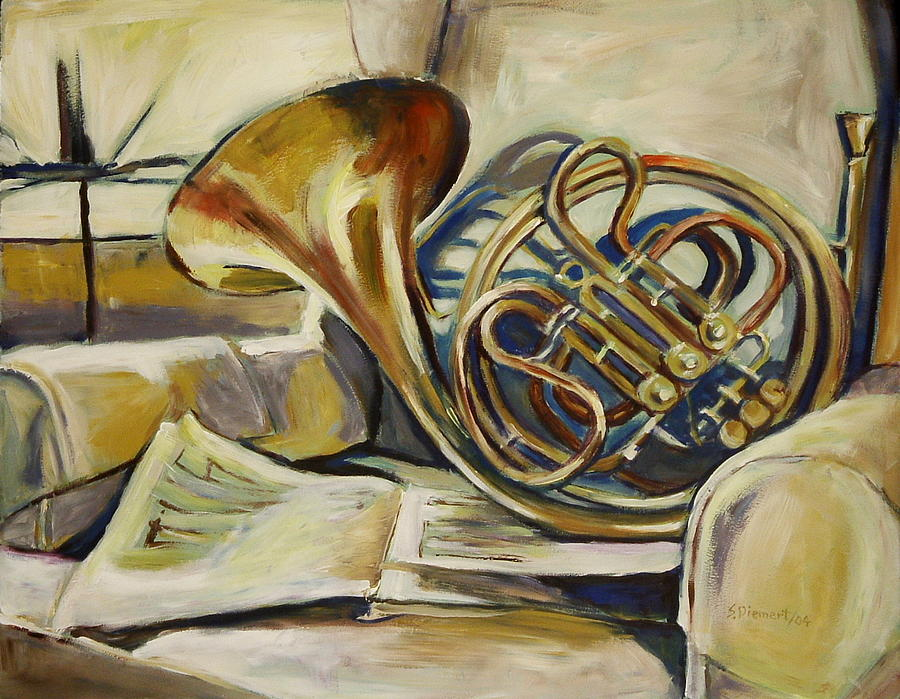
    An artistic painting of a French horn resting on a soft surface next to sheet music, evoking a sense of nostalgia and musicality.

    There are moments in life when we’re suddenly transported back in time — to a different version of ourselves, when life felt simpler, and the future stretched out far ahead.

    This morning, walking into work, I paused mid-step. A scent hit me — not a bad one, but unmistakable.
    It took me straight back to my middle school years, to the days when I was in band. I played the French horn — not particularly well, but I tried.

    The smell came from a French horn case. It’s not an easy scent to describe, but it’s lodged deep in memory. Metallic without being sharp — like an old coin kept in a velvet pouch. Beneath that is the earthy undertone of wood and glue from the case itself, mingled with a musty sweetness. It’s a mix of spit valves, resin polish, worn fabric, and the ghost of rehearsals past. It’s almost more of an emotion than a scent — something you feel before you name.

    That smell was a warm memory from a time when life itself wasn’t always so warm. You don’t encounter it often these days — unless you walk into a band room or an old music store. But in that moment, it felt like a quiet echo from the past.

    Back then, I swore I’d become the greatest French horn player in the world. The truth? I was so bad, dogs would howl when I practiced. I borrowed that instrument from school, carrying it with me as we moved from one town to the next. I tried — for three years.

    That single memory led to another. And another. Until I found myself standing in a flood of moments that helped shape who I am today.

    I always wanted to create music — to pour myself into something without being scolded or silenced. Instruments became a safe outlet for that. My mother once told me my singing voice was like nails on a chalkboard. So I never thought of singing as an option, even after I was the only student in my elementary school chosen for Opus — a prestigious honor choir made up of just 180 students across grades 4–8.

    That experience was surreal. I got to travel by bus and sing Christmas songs with other students from all over the country. No one in my family came to watch. Not even my mom. Being selected for Opus was a big deal. It opened doors — to vocal coaching, performance opportunities, even college paths. But right after my second concert, we moved. I lost my chance to try out again the next year.

    My mom pushed me to stay with the French horn instead. Maybe because it meant less travel. Less involvement. Growing up, the rule was simple: if it meant my mom had to do anything extra, the answer was no. So I let go of Opus and stayed in band.

    Now that you know the backstory, let me take you back to the moment that smell hit me.

    I was in elementary school. We had just finished band class and were headed out to recess. We were playing a game where, if you got tagged, you had to sing something. I got tagged. So I belted out, full voice, in the middle of the playground:
    “And Iiiiiii will always love youuuu!” — full Whitney Houston style.

    Our band director heard me. She stared, then told me to follow her inside. I thought I was in trouble. She led me to the music room and brought in the choir teacher. I was asked to sit down.

    Then I was asked to sing.

    I matched pitch to piano notes, singing up and down the scales while the two women looked at each other in total disbelief.

    “Have you ever sung before?” the choir teacher asked.

    “I sing all the time,” I said. “Outside, in my room, on my bike…”

    “No,” she clarified, “have you ever sung on stage?”

    I answered honestly.
    “Yes — I sang in Opus. Twice.”

    They were floored. They knew what that meant — how selective it was, how competitive, how rare. Thousands of kids audition. Only 180 are chosen.

    That was the day everything shifted. I was pulled out of band and placed into choir.

    I spent the rest of my school years in music — singing in choirs, performing in plays, joining show choir. Those became some of the happiest years of my life. Even when the world shut down during COVID, I sang on Twitch Sings to help feed my family. Music, in its many forms, has remained my refuge — my relief.

    And all of that came rushing back…
    With the smell of a French horn case

    It reminded me not just of childhood or music — but of something deeper. A truth I keep relearning as an adult:

    We can’t always let others carve our paths for us.
    Even with the best intentions (or sometimes, without any), people can steer us away from the very things that light us up inside.

    That old French horn case smell — strange and specific as it is — reminded me of how easy it is to slip into choices that aren’t really ours. To follow directions instead of dreams. To stay where it’s convenient, instead of going where it’s right.

    And here’s the kicker: sometimes, we’re still doing it.
    We find ourselves stuck in jobs, routines, or roles that echo those old compromises. Doing things we’re good at… but not necessarily what we love. Doing what keeps the peace, not what sets our hearts on fire.

    So that scent — that unexpected trigger from years ago — felt like more than a memory.
    It felt like a reminder.

    To listen.
    To choose.
    To stop waiting for permission to follow the thing that’s always been calling.

    Because the path that’s meant for us?
    It doesn’t come pre-carved.

    We carve it ourselves.

    Until next time, keep the coffee strong and the chaos manageable

  • “I Used to Be One of Them”

    By Someone Who Knows Better Now

    In this day and age, it’s heartbreaking to see how common body image mocking still is. At the same time, sadly, it’s not surprising. We’ve developed a nasty habit as a society—this addiction to believing we know what everyone should look like. Somewhere along the way, we forgot a very simple truth: there have been entire periods in human history where women with thicker bodies were considered the pinnacle of beauty.

    Being curvier once signified wealth, fertility, and health. In the Middle Ages, a fuller figure was not only normal—it was desired. Yes, of course, their concept of health was different than ours. But the point still stands: beauty standards are cultural and they are fluid.

    But today? It feels like if you don’t fit into a narrow, often impossible mold, you’re treated like something’s wrong with you.

    I say this as someone who was once guilty of holding those same judgmental beliefs.

    Not when I was 16. Not even at 19. I’m talking into my twenties—full-on adult years. I used to look at people with larger bodies and think, “I’ll never let myself get like that.” I curled my lip. I judged. I thought it was always a result of laziness, or overeating, or not caring about your body.

    In a word: I was ignorant.

    The world I grew up in? We all had our own version of being sheltered. In my version, if someone was overweight, it was their own fault. Self-neglect and poor choices. That’s what I was shown. That’s what I believed. And now, sitting here almost twice the age I was then, I know how dead wrong I was.

    It’s so easy to assume someone is overweight because they “just let themselves go.” But that’s the lazy assumption. It’s the assumption of someone who doesn’t understand medical complexity, genetics, or the impact of trauma.

    Let’s talk about Marilyn Monroe. Most people picture her as this tiny pin-up figure, but she was actually a size 14–18 by today’s standards. So let’s quit pretending that only one kind of body has ever been beautiful.

    I write this now as a thicker woman myself—someone who used to believe in the cookie-cutter ideals of beauty and health. Someone who was “educated” by life, and not gently. My body has become my teacher, and the lessons have been hard-earned.

    You want to know the reality of being mocked or silently judged for your body?

    It’s not just the comments. It’s not even always the stares. It’s the thoughts that echo in your own head long after.

    Thoughts like:

    • “Maybe I need to work out more.”
    • “This is where my self-esteem came to die.”
    • “This is the result of being gross.”
    • “No one wants your drooping belly.”
    • “You’re disgusting, better layer up to hide the rolls.”

    Those weren’t random insults I heard from someone else. Those were the thoughts I had this very morning as I stood in front of the mirror getting dressed for work.

    Then I sit at my desk, feel the waistband of my pants dig in, and think:

    • “Maybe I should’ve worn the black ones.”
    • “Why did I choose pink? Now I just look bigger.”
    • “I should just buy bigger pants before I pop these.”

    And here’s the ironic part: people think I wear black because I like it. Truth is, I love bright, bubbly colors. But black? Black is slimming. It hides the parts of me I’m still ashamed of. It keeps me invisible where I want to disappear.

    All of that mental weight sits on my shoulders before I even open my work emails. It drains my focus, affects my confidence, and makes it that much harder to perform well.

    And yet, I know why I look the way I do. I know this body isn’t the result of laziness, or overeating, or neglect. And no, eating just salads and “healthy” foods won’t fix what’s broken inside me.

    I have a thyroid condition.

    After my second pregnancy, I was diagnosed. No shock—my mom has it. So did my grandmother. It runs deep in our bloodline. Before that? I was rail thin. I could eat like a bottomless pit and not gain an ounce. But that wasn’t health either.

    Turns out I had Graves’ disease, an autoimmune disorder that causes hyperthyroidism. It went undiagnosed for years. Growing up poor, food was scarce. Combine that with a disease that kept my metabolism in overdrive? I was malnourished, anxious, thin—and unwell.

    Let me give you a quick list of what Graves’ disease can do:

    • Weight loss despite constant hunger
    • Fast heartbeat, nervousness, irritability
    • Menstrual changes
    • Extreme fatigue
    • Bulging eyes and skin issues (Graves’ dermopathy)

    My body went from one extreme to another. From too thin to what some might now label “too much.” But it wasn’t my choice either way.

    Now I live in a body that doesn’t reflect the effort I put in. It reflects years of autoimmune battles, pregnancies, surgeries, and hormonal warfare.

    So yes, I used to be one of them—the people who judged. I used to look at bodies like mine and think, “That will never be me.”

    But here I am. And I finally see the truth: Bodies are not billboards for discipline or self-worth. You can’t read someone’s habits, trauma, or medical history by looking at them.

    And if you think you can?

    You’re still ignorant. Just like I once was.

    Until next time, keep the coffee strong and the chaos manageable.